
Collaborative Decorating
Have you ever seen a decorating idea and thought, “I’d love something like that in my home”, but weren’t quite sure how to make it happen?
Perhaps you’ve saved photographs of colourful walls, hand-painted patterns or unusual decorative details. You have an idea of what you’d like, but putting it all together feels a little daunting.
That’s where collaborative decorating comes in.
Instead of simply choosing a colour and leaving everything to a decorator, we can develop something together. You bring your ideas, inspiration and personality to the project, and I bring the practical decorating knowledge to help turn them into something that works in your home.
You can be as involved as you like. Some people prefer to make the creative decisions and leave the painting to me. Others might enjoy picking up a brush and taking part.
It’s a more personal way of approaching decorating, and the finished room should feel like yours.
Discuss Your Decorating Ideas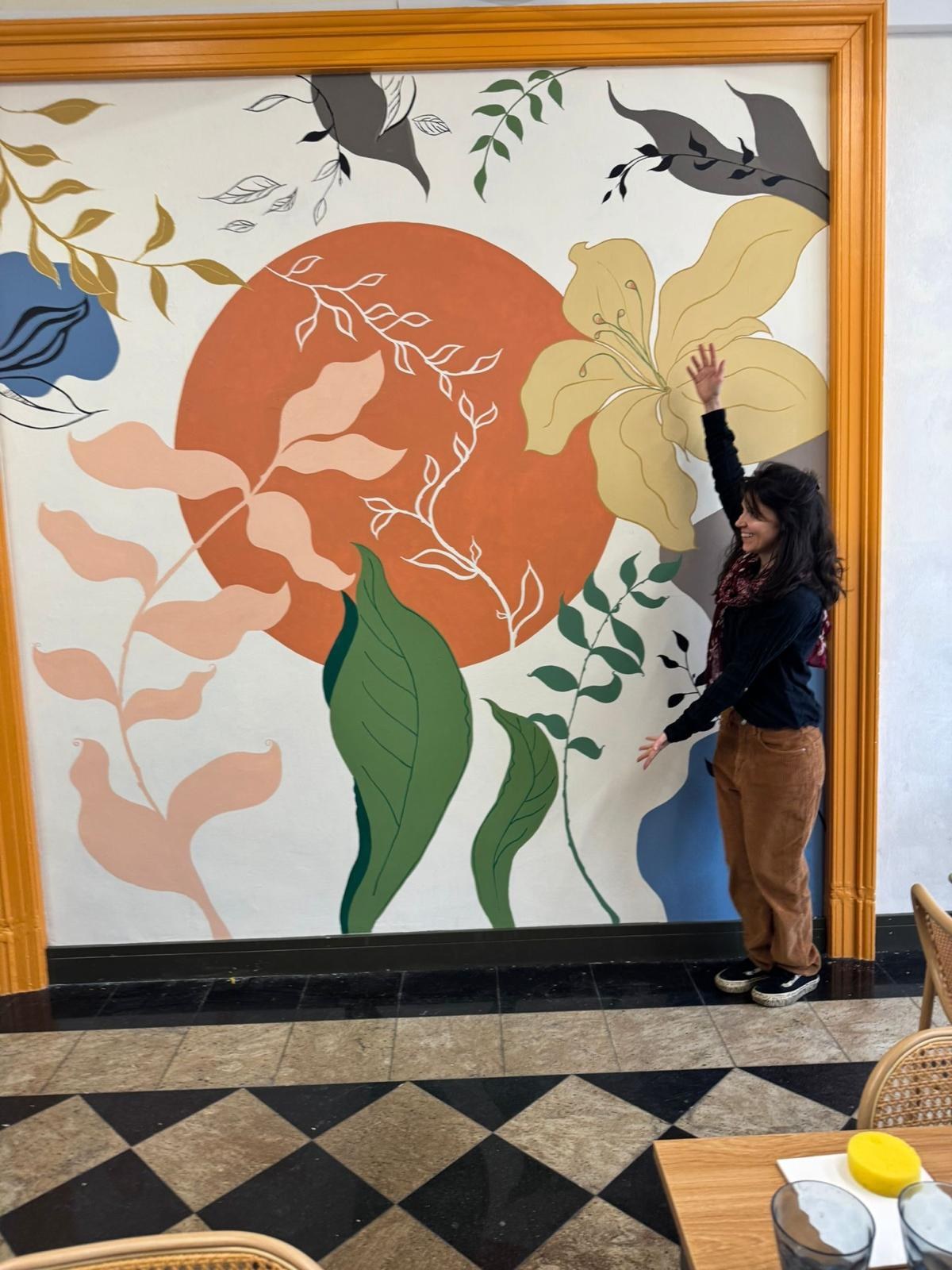
Your Ideas Are the Starting Point
You don’t need to arrive with a complete plan for a collaborative decorating project.
You might have a collection of photographs on your phone, a colour you’ve always loved, or a rough sketch of something you’d like painted on a wall.
Sometimes people have several ideas that don’t immediately seem to belong together. Perhaps there’s a bold painted arch in one photograph, a floral pattern in another and a colour combination that caught your eye somewhere else.
The interesting part is working out which elements would actually suit your room.
I’d start by looking at what you’ve collected and talking through what appeals to you about each idea. It might be the colours, the shapes or simply the atmosphere you want to create.
From there, we can work towards something that feels right for your home rather than trying to reproduce every photograph you’ve saved.
There’s nothing wrong with taking inspiration from somewhere else. The aim is to make it your own.
You Can Be Part of the Decorating
One of the things that makes collaborative decorating different is that you don’t necessarily have to stand back and watch someone else do all the work.
If you’d enjoy taking part, we can look at which parts of the project might be suitable for you to help with.
For example, you might want to help paint a simple block of colour, work on a decorative pattern or contribute to a wall design that you’ve helped develop.
You don’t need to be an experienced painter to have a creative idea.
Of course, not every part of a decorating project is suitable for someone without experience. Preparation, accurate finishing, working at height and particular decorative techniques may be better left to me.
I’ll help plan the work, prepare the surfaces and take care of the professional finishing stages.
And if you’d rather leave all the painting to me, that’s absolutely fine too. You can still be closely involved in how the finished design looks.
The point is that you have a choice.
From Simple Shapes to Something More Creative
There are lots of ways to make a room feel more individual without changing everything in it.
Colour blocking is one possibility. A painted shape or section of colour can highlight a particular area, frame a piece of furniture or create an interesting feature on an otherwise plain wall.
Stencils offer another approach, particularly if you like the idea of a repeated pattern. They can be used for small decorative details or something much more noticeable.
Hand-painted lines, geometric patterns, freehand ornaments and floral designs can also add personality to a space.
Perhaps you’d like a painted border that follows part of a room, a simple design around an alcove or something more imaginative on a bedroom wall.
Some projects might also involve panelling or wallpaper as part of the wider design. The important thing is to consider how the different elements will work together.
We don’t have to use every technique in the same room. Sometimes one interesting detail is enough.
For larger or more elaborate hand-painted designs, you can also explore my Murals & Decorative Finishes service.
Making the Design Work in a Real Room
Something that looks wonderful in a photograph doesn’t always work in quite the same way when you try to recreate it at home.
The wall might be a different size, the ceiling lower or the furniture positioned somewhere that changes how the design will look.
This is where planning becomes useful.
If you’re considering a large painted shape, for example, I’d want to look at where it begins and ends. Does it sit behind the sofa? Does it need to work around a window or doorway? Will it still look balanced when the furniture is back in place?
The colours need some thought too.
A bright colour can be lovely in a small area but have a much stronger effect when it’s covering half the room.
We can look at suitable samples, consider the proportions and make adjustments before committing to the finished design.
I’d rather spend a little time getting those decisions right than discover that something doesn’t feel quite right after it’s been painted.
For separate advice on colours and materials, my Colour & Materials Consultation costs £50 per hour.
Getting Children Involved in Their Own Rooms
Children often have wonderfully imaginative ideas about how they’d like their bedrooms to look.
They might have a favourite colour, an interest they want reflected in the room or an idea that seems completely different from anything you’d choose yourself.
Collaborative decorating can be a way of giving them some involvement in creating their own space.
That might mean helping choose the colours, deciding where a design should go or contributing ideas for simple shapes and patterns.
Depending on their age and the work involved, there may even be suitable painting activities they can take part in with appropriate adult supervision.
I think it’s worth considering how the room will work as they grow, too. A design doesn’t necessarily have to dominate every wall to make a child’s bedroom feel special.
Sometimes a smaller feature or a combination of colours can be just as effective, with the added advantage that it’s easier to change later.
The aim is to create something that reflects their personality while still being practical as a room they use every day.
Keeping the Creative Work Practical
A creative idea still needs to be approached as a proper decorating project.
The wall or furniture needs to be suitable for the proposed finish, and the preparation can be just as important as the decorative work itself.
Different techniques may call for particular paints, materials or preparation. A stencil on a smooth wall is a different proposition from a larger freehand design on a rough or uneven surface.
I can help work out what’s appropriate for the project, prepare the surfaces and help source suitable materials and supplies.
The process also needs to be manageable.
If you’re taking part in some of the painting, we can decide which stages make sense for you to help with and which are better handled professionally.
I want the creative side to be enjoyable, but I also want the finished work to look good.
Those two things should go together.
How We Can Develop Your Project
The easiest place to begin is with your ideas.
Send me some photographs of the room and any examples of colours, patterns or decorative effects that interest you.
It helps to know what you’d like to change and whether you’re hoping to be involved in the actual painting or would prefer me to carry out the work.
From there, we can discuss the possibilities and establish what the project might involve.
Some ideas will be relatively straightforward. Others may need more planning, particularly when several decorative techniques or fitted elements are involved.
We can consider the design, suitable materials, preparation and how the work could be organised.
Once we’ve established the scope, I can prepare a quotation for your collaborative decorating project.
You don’t have to arrive with all the answers. A few photographs and an idea of the result you’re hoping for are enough to start the conversation.
A Little Inspiration
Sometimes it’s easier to imagine what might be possible when you can see the effects that colour and decorative details have had in real rooms.
Here are some examples of my painting and decorative work.
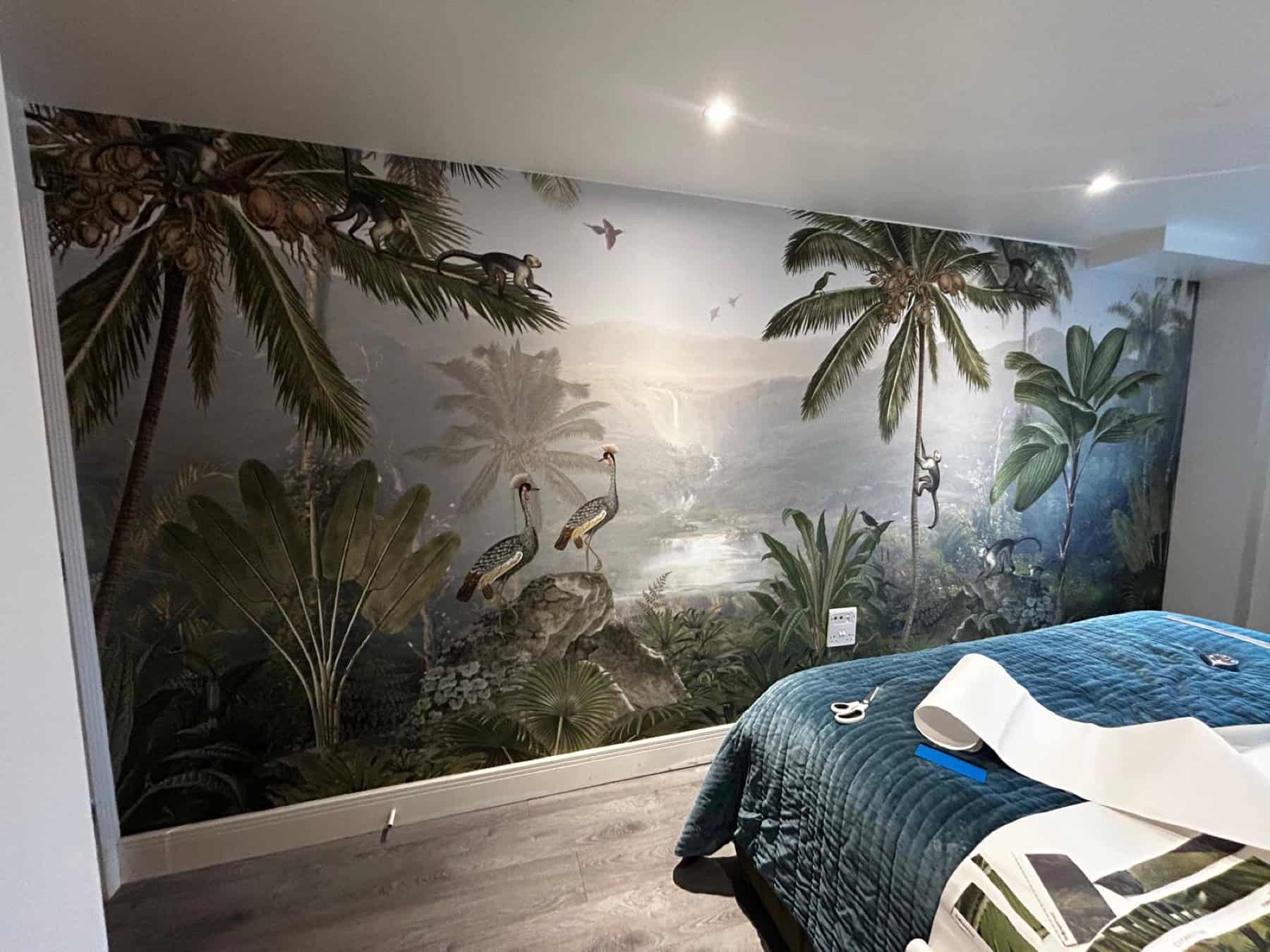
Tropical wall mural wallpaper
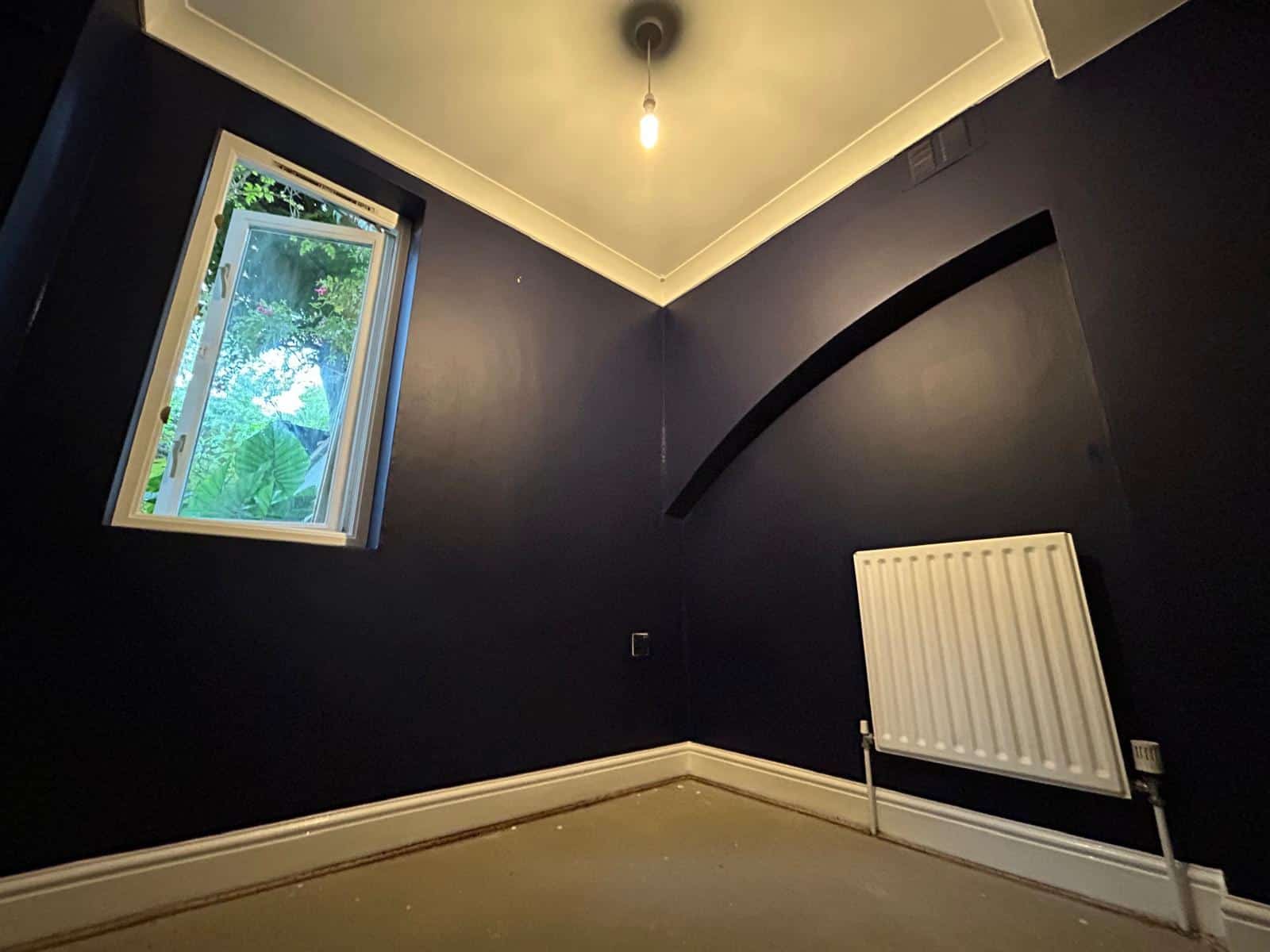
Deep purple walls and contrasting woodwork
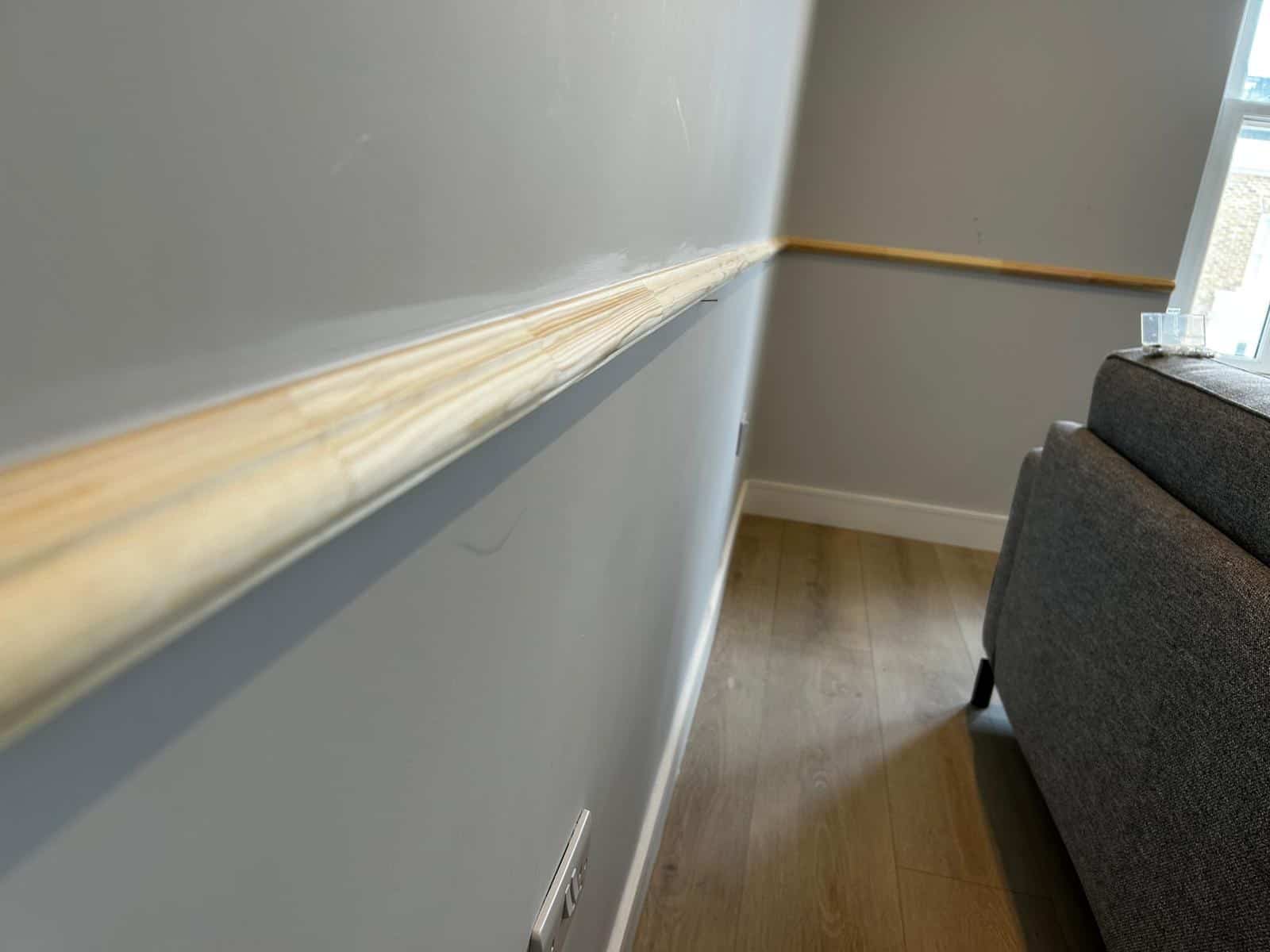
Painted walls and dado detail
Creative Decorating FAQs
How can I combine several decorating ideas without making a room feel too busy?
I’d start by looking at what the different ideas have in common. You might find that several photographs use similar colours, shapes or styles, even though the finished rooms look quite different.
It often helps to choose one element as the main feature and let the others support it. For example, if you’re creating a bold painted pattern on one wall, the surrounding colours might be quieter.
You don’t have to abandon all the ideas you love, but giving everything equal attention can make the room feel unsettled. Sometimes leaving something out makes the remaining design much stronger.
How do I decide where a painted pattern or decorative shape should go?
I think it’s worth starting with how you actually use the room rather than treating the wall as an empty canvas.
Look at where the furniture sits, which parts of the wall are visible and where your attention naturally goes when you enter.
A painted arch might work beautifully behind a desk or bed, while a geometric design could help define a particular area of a larger room.
It’s also worth checking the proportions before painting. Marking out the approximate size of a shape can help you see whether it feels balanced in the space.
Is stencilling better than painting a design freehand?
Neither is automatically better. They create different effects.
Stencils are useful when you want a repeated pattern or a design with fairly consistent shapes. They can be particularly effective for borders, geometric details and decorative motifs.
Freehand painting gives you more flexibility, especially when the design is intended to look individual or less uniform. It may be more suitable for organic shapes, flowers or something that needs to fit an unusual space.
The choice depends on the design, the surface and the finish you’re hoping to achieve. Sometimes a combination of the two approaches works well.
Can I paint over a decorative wall design if I want to change it later?
In many cases, yes. A design created with suitable ordinary wall paint can often be redecorated when you want something different.
However, the existing finish will affect the preparation required. Strong colours may need appropriate covering coats, while raised textures or specialist decorative materials can need additional work before repainting.
It’s worth thinking about this when choosing a technique, particularly in a child’s bedroom or somewhere you expect to redecorate in a few years.
A hand-painted design doesn’t necessarily have to be a permanent commitment, but the ease of changing it depends on how it was created.
Let’s Create Something Personal
If you’ve got an idea for your home that goes beyond ordinary painting and decorating, I’d be interested to hear about it.
Perhaps it’s something you’ve seen online, a design you’ve sketched yourself or simply a feeling that one of your rooms could have a little more personality.
You don’t need to know how to achieve it. That’s something we can work through together.
Send me your ideas, a few photographs of the space and an indication of whether you’d like to take part in the decorating.
Let’s see what we can create.
Discuss Your Project