
INDEPENDENT DECORATOR · LONDON
Furniture & Kitchen Cabinet Painting
You can become quite tired of looking at the same kitchen cupboards or fitted furniture, even when there’s absolutely nothing wrong with them. Perhaps you’ve inherited a kitchen that’s perfectly serviceable but isn’t a colour you’d have chosen. Or maybe those fitted cupboards that once looked lovely have started to feel rather dated.
Replacing everything can seem like the obvious solution, but it isn’t always necessary. I offer furniture and kitchen cabinet painting across London, helping homeowners give suitable existing cupboards, shelving and other furniture a fresh appearance without automatically replacing them.
Sometimes a change of colour is enough to make you see a piece of furniture, or even a whole room, differently.
Request a Quote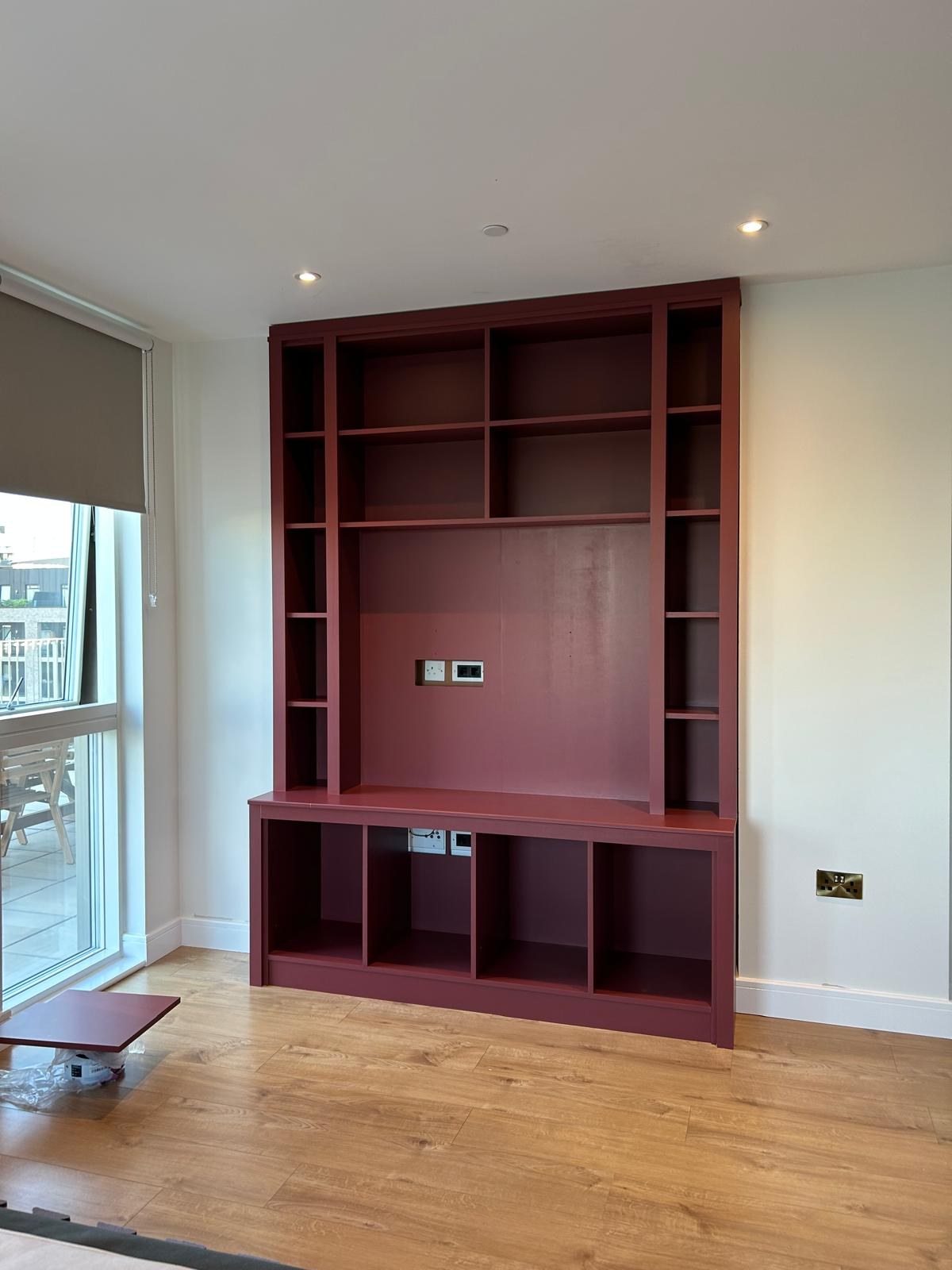
Kitchen Cabinet Painting, Without Replacing the Kitchen
Kitchen cupboards have a big influence on how a kitchen looks. There can be quite a lot of them, and their colour often dominates the room. If you’re happy with the layout and the units are still in good condition, repainting them may be worth considering before committing to an entirely new kitchen.
I’ve seen how much difference a colour change can make to fitted furniture, and the same principle applies to kitchen cabinetry. A kitchen with dark cupboards might feel completely different in a softer, lighter shade. Equally, a deeper green, blue or warm neutral can give fairly ordinary cabinets much more character.
Of course, the cupboard colour isn’t the only thing to consider. Existing worktops, splashbacks, flooring and handles all influence how the finished kitchen will look. There’s not much point choosing a colour you love in isolation if it doesn’t sit comfortably alongside everything you’re keeping.
I think it’s worth looking at the kitchen as a whole before deciding what colour the cupboards should be. And if the existing units are damaged or unsuitable for painting, I’d rather discuss that honestly than suggest repainting is the answer to every problem.
Can Your Existing Kitchen Cabinets Be Painted?
This is one of the first things worth establishing. Not all kitchen cupboard doors and cabinet surfaces are made from the same materials. Some are solid wood, some are MDF, and others have laminate, vinyl or factory-applied finishes. These materials can behave differently when they’re prepared and painted.
A cupboard that’s in good condition may be a suitable candidate for repainting, while another with peeling coverings, moisture damage or a deteriorating surface may need a different approach. The existing finish matters too. A surface that looks perfectly smooth can present problems if the new paint system isn’t appropriate for it.
Before agreeing on a project, I need to understand what the cabinets are made from and what condition they’re in. Clear photographs are a good starting point, particularly close-ups of the cupboard doors, edges and any areas where the existing finish is damaged.
Once I know what we’re dealing with, we can discuss whether painting is a sensible option. I’d much rather establish that at the beginning than promise a transformation that the existing materials won’t support.
Painting Fitted Cupboards and Shelving
Kitchen cabinets aren’t the only fitted furniture that can benefit from painting. Built-in cupboards, shelving units, alcove storage and fitted furniture can all have quite a strong presence in a room.
Sometimes they blend into the background. Other times, they’re one of the first things you notice when you walk through the door. And that’s where colour becomes interesting.
You might want a fitted unit to feel as though it’s always been part of the room, using a colour that works quietly with the surrounding walls. Or you might decide to do exactly the opposite and turn it into a feature.
A rich colour on fitted shelving can look wonderful, particularly when the rest of the room is relatively simple. Even painting an existing cabinet in a much softer shade can change its appearance without altering its shape or layout.
Before and After, Painted Living Room Storage
Before
After
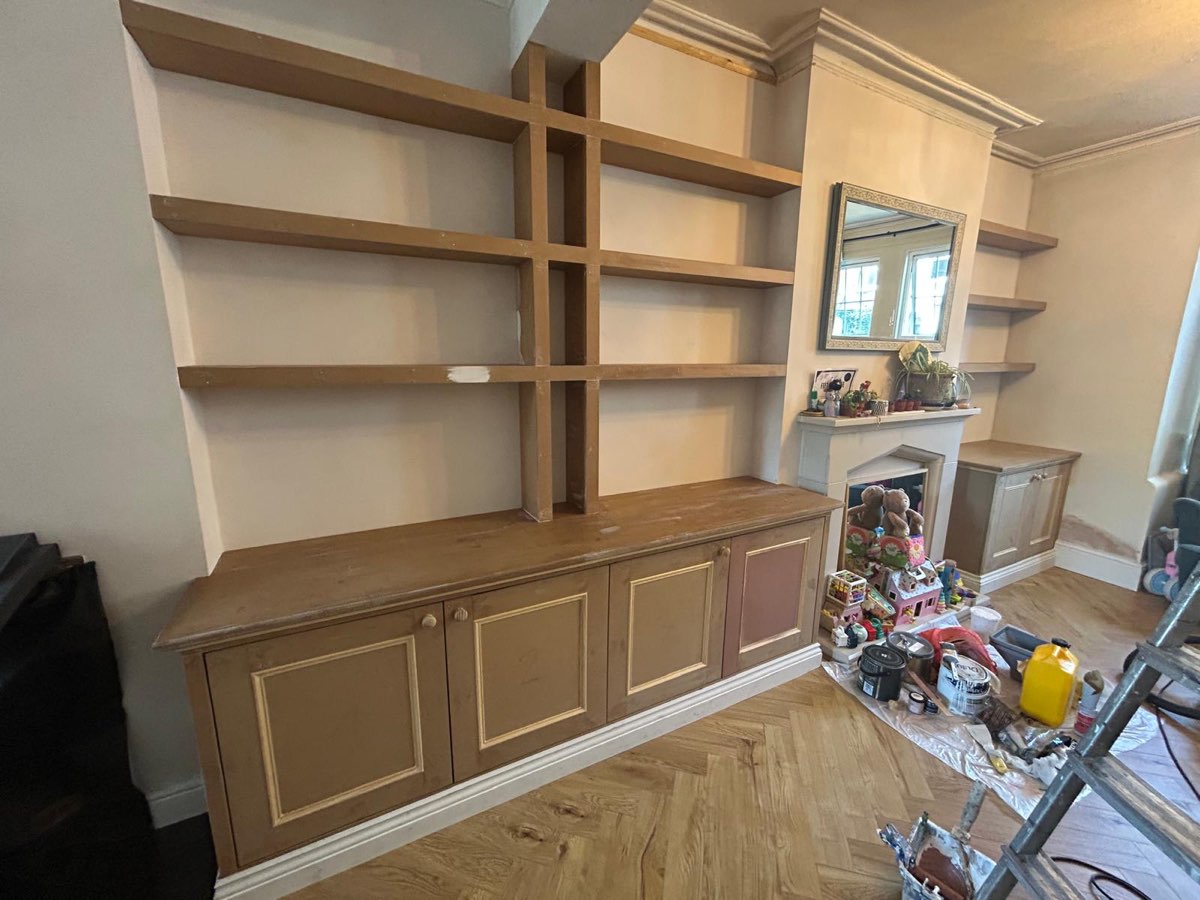
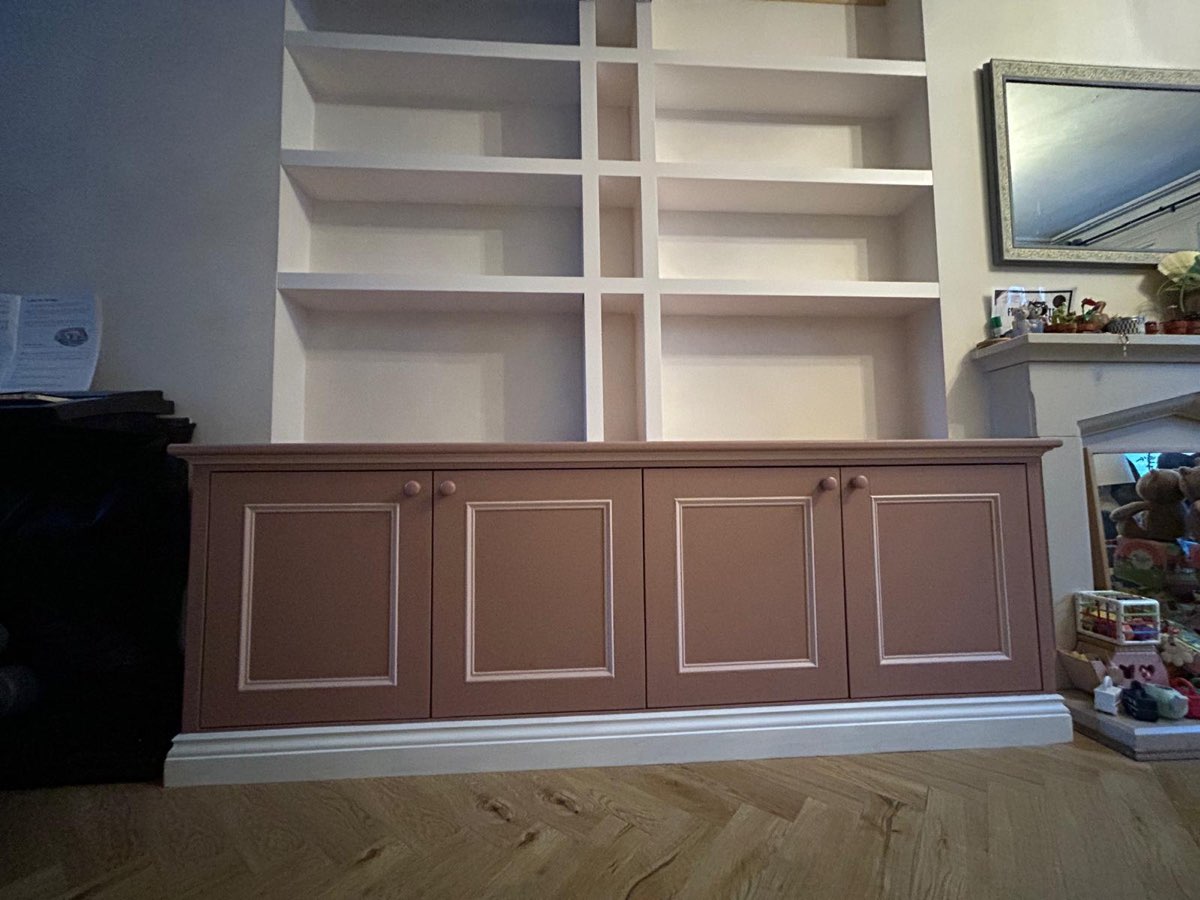
These photographs show a fitted living room storage unit with cupboards beneath open shelving. In the original photograph, the woodwork has a brown finish. In the second photograph, the upper shelving has been painted in a pale colour, while the cupboard fronts have a softer pink finish.
It’s a good example of how colour can change the appearance of existing fitted furniture without changing the basic structure. The two colours also give the upper shelving and lower cupboards their own character, rather than treating the whole installation as one continuous block of colour.
This is the kind of transformation that can make existing furniture feel much more at home in a newly decorated room.
For the surrounding walls and woodwork, I also offer interior painting and decorating.
A Bold Colour Can Make All the Difference
People sometimes assume that painting furniture means choosing white, cream or another fairly neutral colour. Those shades can certainly work well, but they’re by no means the only options.
A deep burgundy, for example, can give fitted shelving a completely different presence. Rather than trying to make the unit disappear, the colour allows it to become a distinctive part of the room.
I think this is particularly interesting with built-in furniture because the shape of the shelving, cupboard openings and surrounding framework all contribute to the final appearance. The same colour can look quite different on a small cupboard and a large fitted unit.
It’s worth considering how much of the colour you’ll see when you enter the room and how it will work with the surrounding walls and flooring.
Before and After, Burgundy Fitted Shelving
Before
After
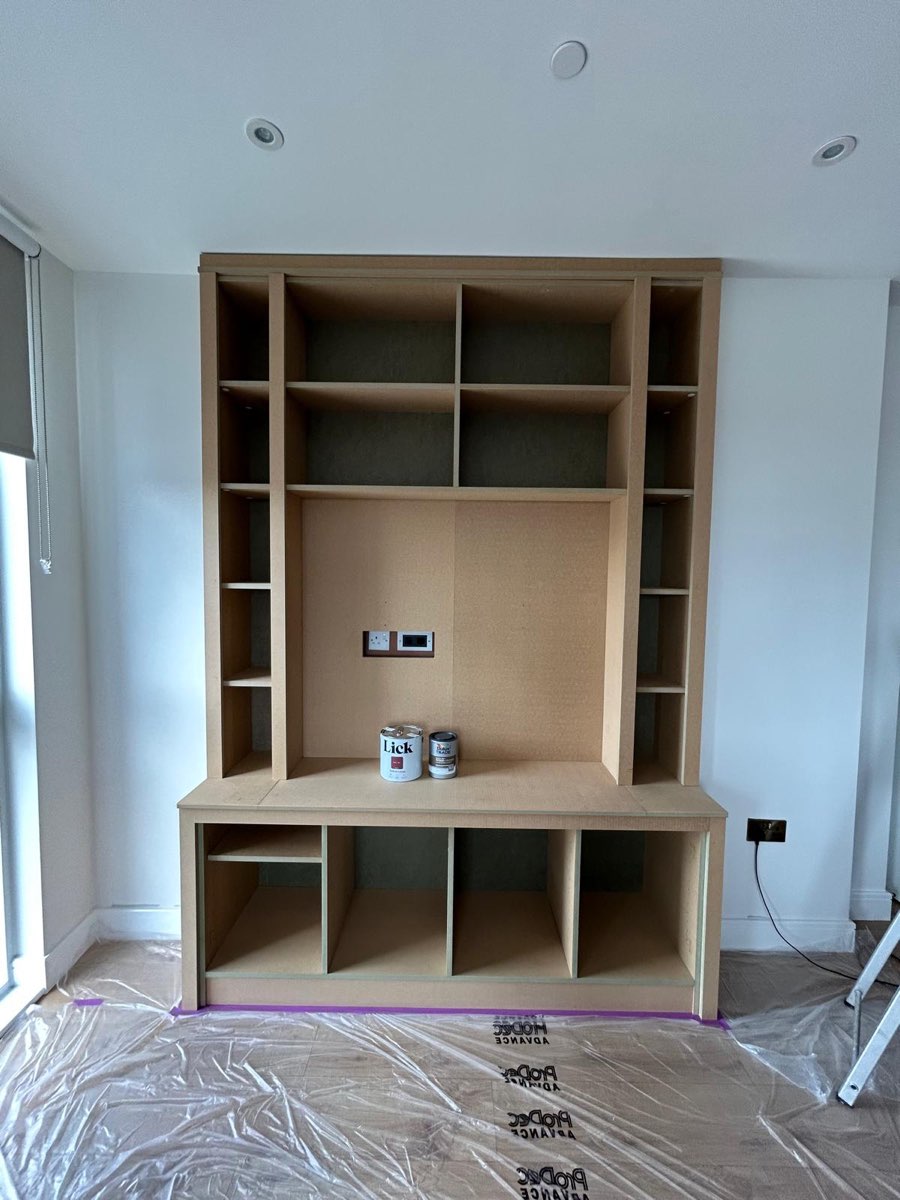
This second pair of photographs shows a large fitted storage and shelving unit. The first photograph shows the unit in an unfinished wood-based material, before painting. The second shows the same structure painted in a rich burgundy colour.
The transformation is particularly noticeable because the colour now brings together the shelves, framework and lower storage compartments. It’s a striking example of what a carefully chosen colour can do for a substantial piece of fitted furniture.
These photographs show the painting stage of the installation.
Painting Freestanding Furniture
Sometimes it’s not the fitted cupboards that need attention, but a piece of furniture you’ve had for years. Perhaps there’s a chest of drawers that’s still perfectly useful but no longer suits the bedroom. Or a cupboard that would look much better painted in a colour that complements the surrounding room.
I can consider painting suitable freestanding furniture as well as fitted cabinetry. The first thing is to look at the piece itself. What is it made from? What’s the existing finish like? Is the surface in good condition, or are there areas that need attention?
Not every piece of furniture is a good candidate for painting. Some materials and existing finishes can be difficult to work with, and sometimes preserving the original appearance is the better option.
But where a piece is suitable, repainting can be a lovely way of keeping something useful while giving it a different character. It doesn’t have to look like a completely different piece of furniture. Sometimes a fairly modest colour change is enough.
Preparation Is Particularly Important with Cabinets
Painting cabinets and furniture is rather different from painting an ordinary wall. Kitchen cupboards, in particular, are handled regularly. Doors are opened and closed, drawers are pulled out, and surfaces can be exposed to grease, cleaning products and everyday wear.
That’s why the condition of the existing surface and the choice of materials matter so much. Depending on the cabinet material and its condition, preparation may involve cleaning, dealing with suitable existing coatings, sanding appropriate surfaces and using a primer designed for the particular material.
The paint system also needs to be suitable for the intended use. I wouldn’t want someone choosing a lovely new colour only to discover that the underlying surface wasn’t suitable for the proposed finish. It’s worth understanding what can realistically be achieved before the work begins.
Painted furniture and cupboards still need reasonable care, and no painted surface is completely immune to knocks or wear. But using an appropriate preparation and finishing system is an important part of achieving a satisfactory result.
Choosing a Colour and Finish
When you’re choosing a new colour for existing furniture, I think it’s worth looking at what will stay the same. If you’re repainting a kitchen, the worktops, wall tiles and flooring may all remain exactly as they are. The new cupboard colour needs to work with those existing features.
It’s similar with fitted furniture in a living room or bedroom. The surrounding wall colour, flooring, natural light and even the contents of open shelving will influence how the finished unit looks.
The choice of paint finish matters too. Matt, eggshell, satin and other finishes can produce quite different appearances, and not every finish is appropriate for every surface or use. A little sheen may highlight details in cupboard doors or decorative mouldings, while a flatter appearance may suit a different style.
I don’t think there’s one finish that’s automatically right for every project. It’s a question of finding something that works with the furniture, the room and how the surfaces will be used.
If you’re planning a wider change to the colours and materials in your home, I also offer a separate Colour & Materials Consultation service. This is a paid service at £50 per hour.
A Few Questions About Furniture and Cabinet Painting
Is painting kitchen cabinets cheaper than replacing them?
It can be, particularly when the existing cupboards are in good condition and you’re happy with the kitchen layout. However, it depends on the number of units, their material, the preparation needed and the finish you’re hoping for. I would need to look at the particular kitchen before discussing what the work would involve.
Can you paint laminate kitchen cupboards?
Some laminate and other factory-finished surfaces can be painted using appropriate preparation and compatible products, but not every surface is suitable. I would need to know what the cupboard doors are made from and check their condition before recommending an approach.
Do kitchen cupboard doors need to be removed for painting?
That depends on the design of the cabinets and the method being used. Removing doors or fittings can sometimes make preparation and finishing easier, but I wouldn’t assume every kitchen needs exactly the same approach. It’s something to establish when assessing the work.
Can you paint fitted wardrobes and built-in shelving?
Yes, suitable fitted furniture can be considered for painting, including wardrobes, cupboards and shelving. The existing material and surface condition will determine what’s practical. Photographs of the complete unit and close-ups of its finish are particularly useful.
Thinking About Painting Your Cabinets or Furniture?
If you’re considering giving your kitchen cupboards or fitted furniture a different look, I’d be happy to see what you have in mind. You might already know exactly which colour you’d like, or you may simply have reached the point where you’re tired of looking at the existing finish. Either is a perfectly good starting point.
A few photographs will help me understand the furniture, its condition and the sort of work involved. For kitchen cabinets, it’s useful to see the whole kitchen as well as close-ups of the cupboard doors and surfaces.
Tell me a little about your project, and we can discuss whether painting is the right approach.
Quote form and WhatsApp contact are awaiting setup. These controls are currently unavailable.